Aurora A
Aurora A kinase (AURKA) is a conserved serine/threonine kinase that primarily regulates centrosome maturation, centrosome separation, and bipolar spindle assembly during mitosis, thereby supporting accurate chromosome segregation and cell-cycle progression[1][2]. Mechanistically, AURKA functions within mitotic spindle regulatory networks and is activated through interactions with spindle-associated cofactors such as TPX2, which promotes spatial control of kinase activity during mitosis[3][4]. Through its role in microtubule organization and spindle formation, AURKA contributes to the maintenance of genomic stability, whereas dysregulated AURKA activity is associated with abnormal mitotic progression and chromosomal instability in cancer models[1][5]. In disease-relevant experimental systems, aberrant Aurora kinase signaling has been linked to tumor development and progression, supporting the use of AURKA as a molecular target in studies of mitotic control and oncogenic transformation[5][6]. Compared with related isoforms, Aurora B predominantly regulates chromosome-microtubule attachment, spindle checkpoint signaling, chromosome alignment, and cytokinesis as a core component of the chromosomal passenger complex, whereas AURKA mainly functions at centrosomes and spindle poles during early mitosis[1][2][3]. This spatial and functional distinction provides an important framework for isoform-selective experimental design and interpretation of mitotic phenotypes[1][3]. For research applications, Aurora kinase inhibitors are widely used to investigate mitotic signaling pathways and chromosome segregation mechanisms, and selective targeting strategies continue to be explored in anticancer research models[6].
References:
- [1]. Willems E, et al. The functional diversity of Aurora kinases: a comprehensive review. Cell Div. 2018 Sep 19;13:7. [Content Brief]
- [2]. Carmena M, et al. The cellular geography of aurora kinases. Nat Rev Mol Cell Biol. 2003;4(11):842-854.
- [3]. Carmena M, et al. Making the Auroras glow: regulation of Aurora A and B kinase function by interacting proteins. Curr Opin Cell Biol. 2009 Dec;21(6):796-805. [Content Brief]
- [4]. Wikipedia.
- [5]. Pérez de Castro I, et al. Editorial: Aurora Kinases: Classical Mitotic Roles, Non-Canonical Functions and Translational Views. Front Oncol. 2017;7:48.
- [6]. Kitzen JJ, et al. Aurora kinase inhibitors. Crit Rev Oncol Hematol. 2010 Feb;73(2):99-110. [Content Brief]
-
Aurora A Related Products (111)
Related Products (111)

-
Antibodies (2)
-
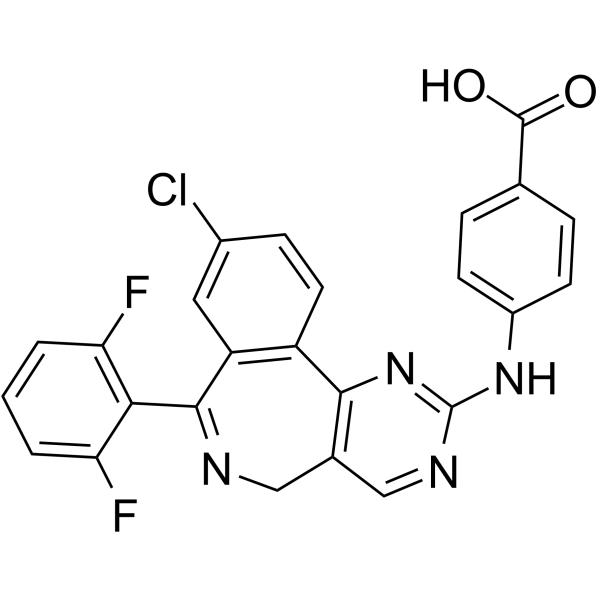
Alisertib
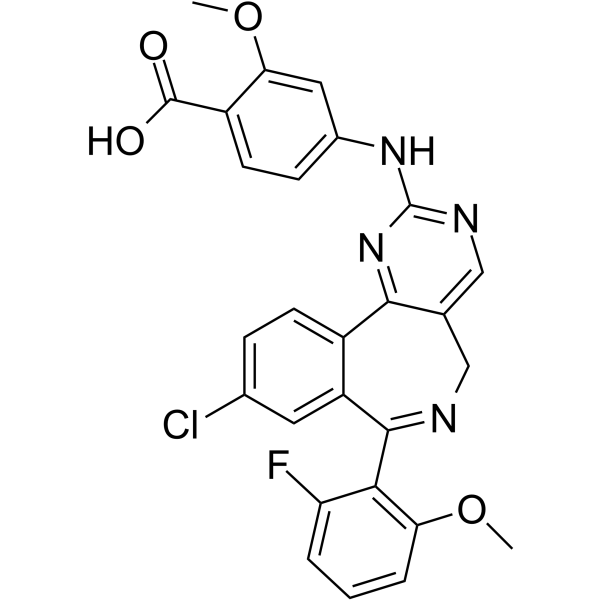 0 ImagesSynonyms: MLN 8237Alisertib (MLN 8237) is an orally active and selective Aurora A kinase inhibitor (IC50=1.2 nM), which binds to Aurora A kinase resulting in mitotic spindle abnormalities, mitotic accumulation. Alisertib (MLN 8237) induces apoptosis and autophagy through targeting the AKT/mTOR/AMPK/p38 pathway in leukemic cells. Antitumor activity.
-
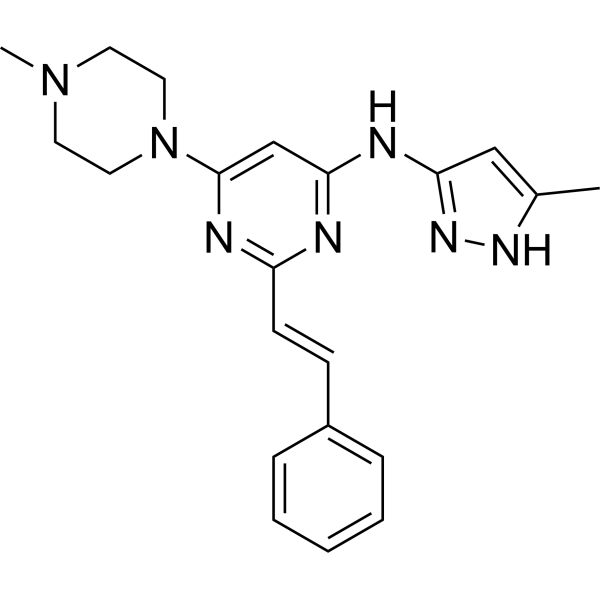
Reversine
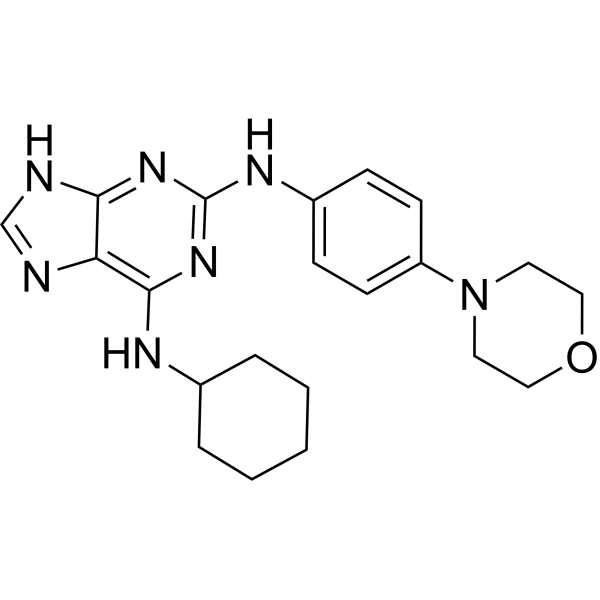 0 ImagesReversine is a novel class of ATP-competitive Aurora kinase inhibitor with IC50s of 400, 500 and 400 nM for Aurora A, Aurora B and Aurora C, respectively.
-
dAurAB5
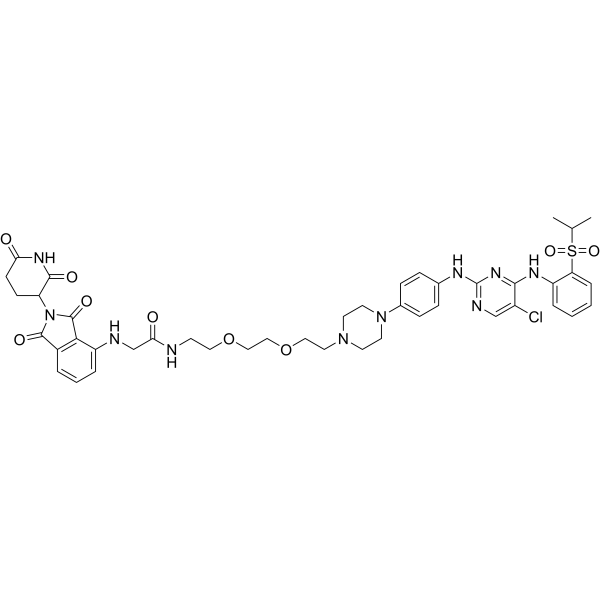
 0 ImagesdAurAB5 is a potent Aurora-A/Aurora-B PROTAC degrader with DC50 values of 8.8 nM and 6.1 nM, respectively. dAurAB5 promotes proteasomal degradation of target proteins, induces ubiquitination of Aurora-A and Aurora-B kinases, and downregulates the protein levels of TTK and MYCN. dAurAB5 can be used in studies related to neuroblastoma[1].
-
Danusertib
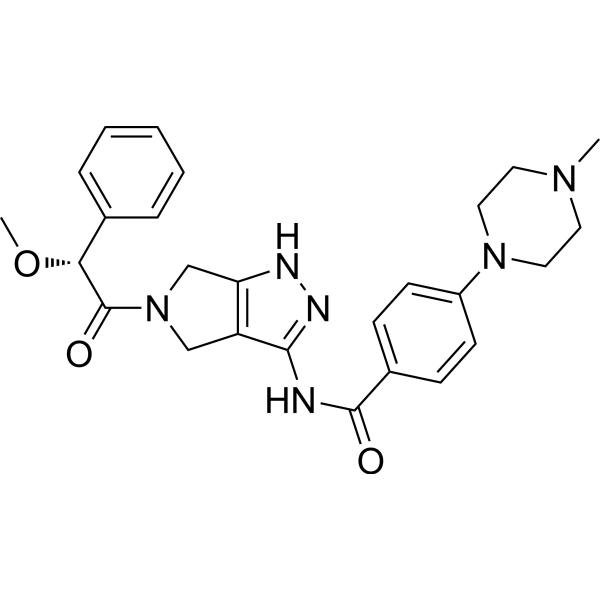 0 ImagesSynonyms: PHA-739358Danusertib is a pyrrolo-pyrazole and aurora kinase inhibitor with IC50 of 13, 79, and 61 nM for Aurora A, B, and C, respectively.
-
KW-2449
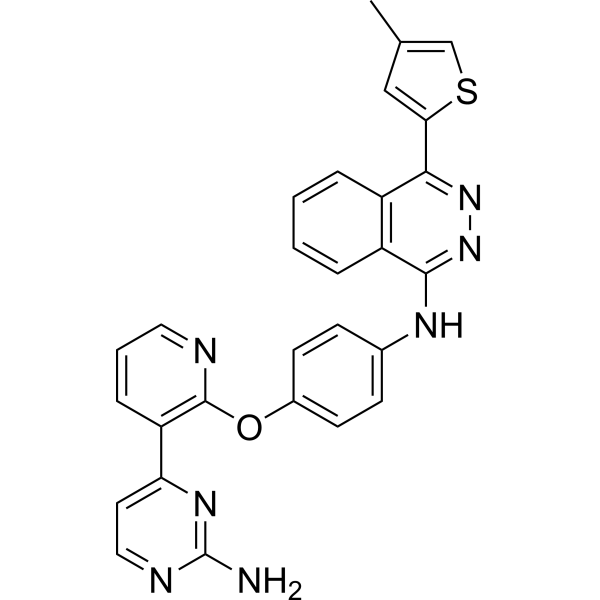
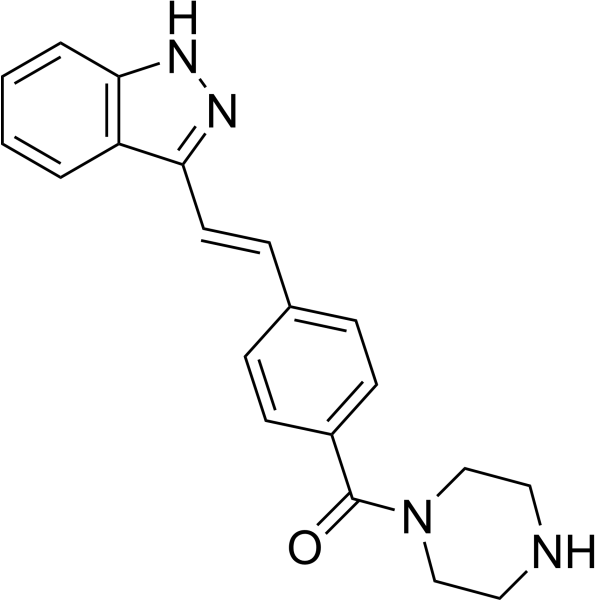 0 ImagesKW-2449 is a multi-targeted kinase inhibitor of FLT3, ABL, ABLT315I and Aurora kinase with IC50s of 6.6, 14, 4 and 48 nM, respectively.
-
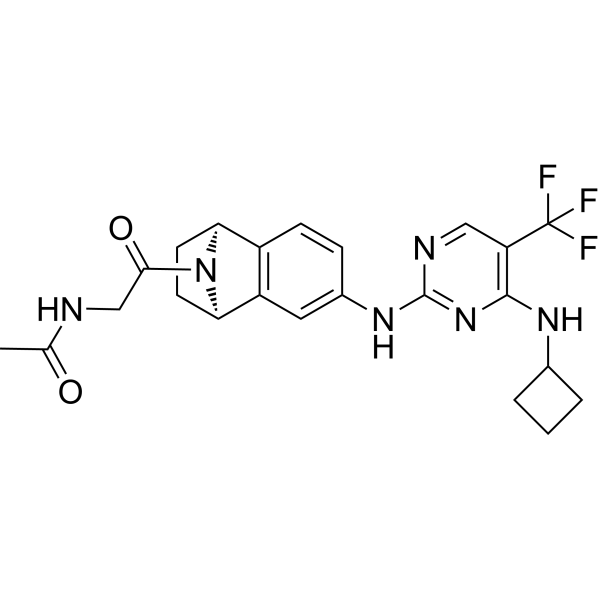
LY3295668
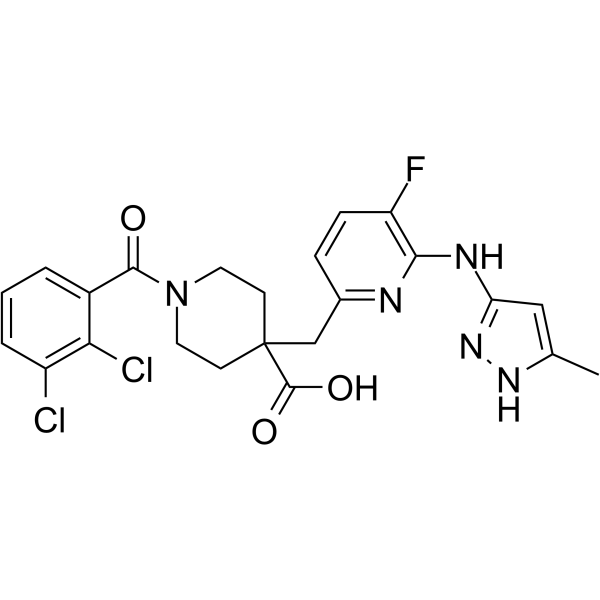
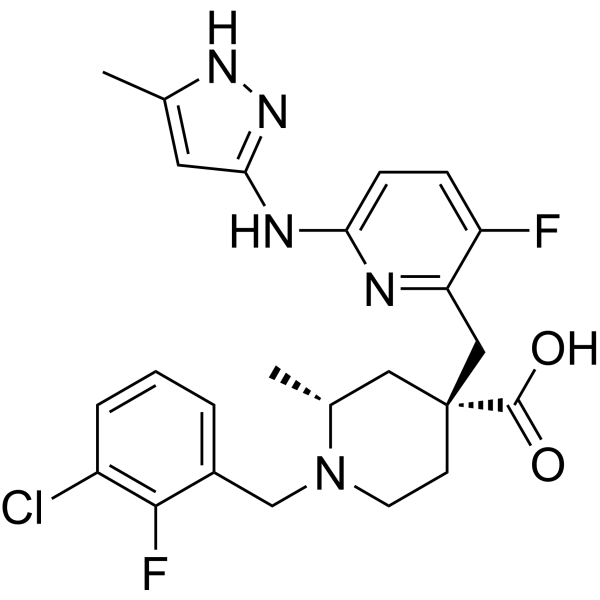 0 ImagesSynonyms: AK-01LY3295668 (AK-01) is a highly specific and orally active inhibitor of Aurora-A kinase with a Ki values for AurA and AurB of 0.8 nM and 1038 nM respectively. LY3295668 can effectively inhibit the autophosphorylation of AurA, induce mitotic arrest and apoptosis. LY3295668 avoids the formation of polyploids related to AurB inhibition. LY3295668 can be used for the study of small cell lung cancer.
-
GRK6-IN-1
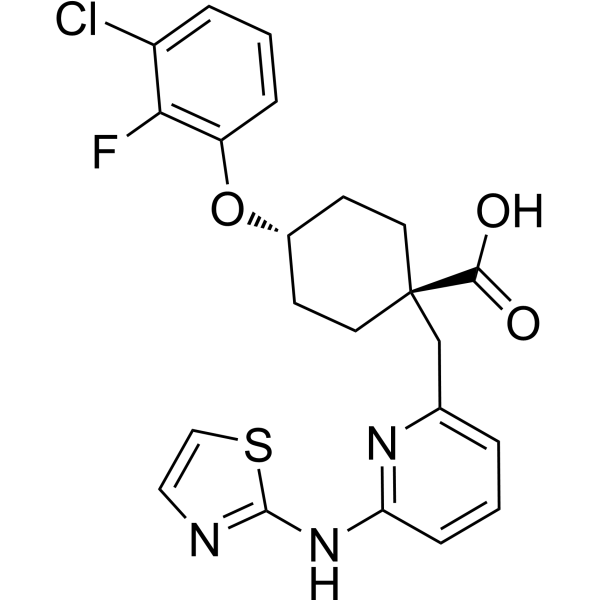
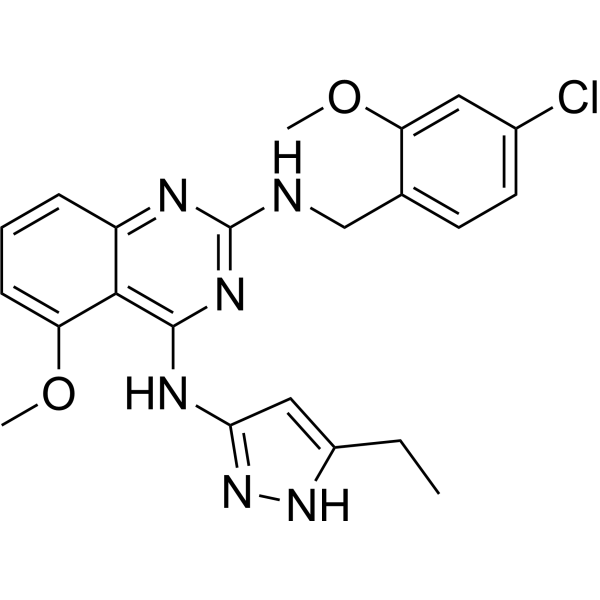 0 ImagesGRK6-IN-1 (Compound 18) is the inhibitor for G protein-coupled receptorkinase 6 (GRK6) with an IC50 of 3.8-8 nM. GRK6-IN-1 also inhibits GRK7, GRK5, GRK4 and GRK1 with IC50s of 6.4, 12, 22 and 52 nM, respectively. GRK6-IN-1 has the potential for the research of multiple myeloma.
-
PF 477736
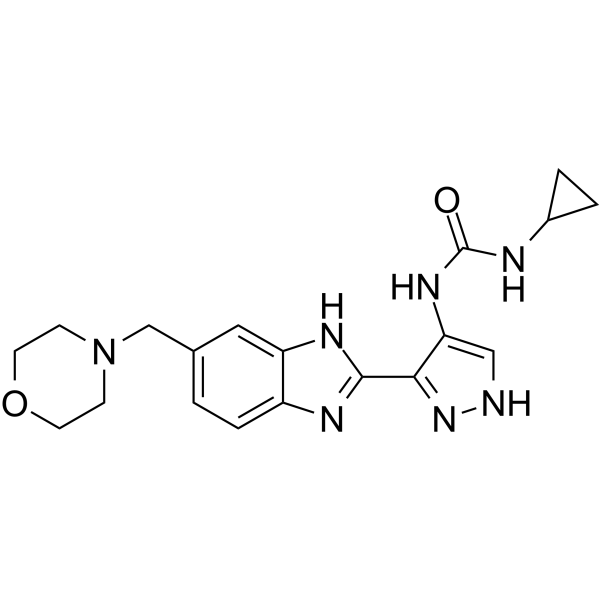
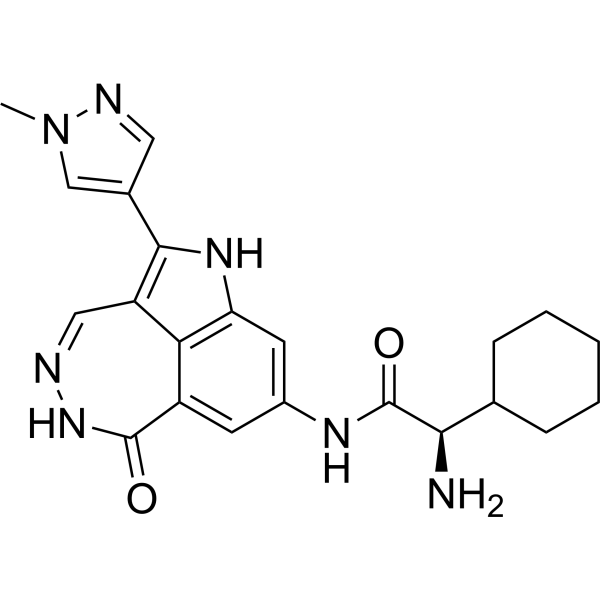 0 ImagesSynonyms: PF 00477736PF 477736 (PF 00477736) is a potent, selective and ATP-competitive inhibitor of Chk1, with a Ki of 0.49 nM, it is also a Chk2 inhibitor, with a Ki of 47 nM. PF 477736 shows <100-fold selectivity for Chk1 over VEGFR2, Fms, Yes, Aurora-A, FGFR3, Flt3, and Ret (IC50=8 (Ki), 10, 14, 23, 23, 25, and 39 nM, respectively). PF 477736 can enhance Gemcitabine antitumor activity in vitro and in vivo.